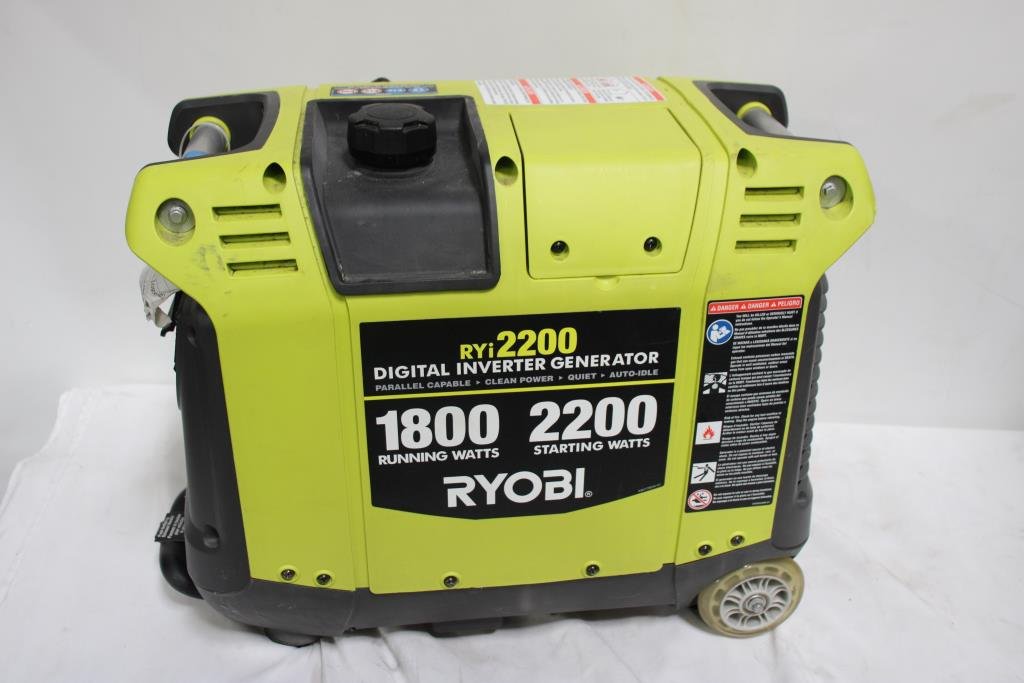
When you’re eyeing a portable power solution, the question inevitably arises: how does a Ryobi Inverter Generator vs. Competitor Brands stack up? It's a crowded market, packed with options from budget-friendly workhorses to premium, whisper-quiet powerhouses. For many homeowners, DIY enthusiasts, and campers, Ryobi often comes to mind for its recognizable green tools and accessible price point. But is it the right choice for your needs, or are you better off with a Honda, Champion, Generac, or another contender?
Navigating the landscape of portable generators can feel like a maze. You're not just buying wattage; you're investing in reliability, noise levels, fuel efficiency, and the peace of mind that comes with knowing your sensitive electronics are safe. This guide cuts through the marketing noise to give you a clear, expert comparison, helping you power your world, confidently.
At a Glance: Ryobi Inverter Generators vs. The Field
- Ryobi's Niche: Generally offers budget-friendly, reliable power for basic home backup, camping, and DIY projects.
- Best For: Value-conscious users needing clean power for everyday appliances and light electronics.
- Key Strengths: Affordability, decent performance for the price, integration with Ryobi ONE+ system on some models.
- Key Trade-offs: Can be louder than premium models, typically less fuel-efficient, shorter warranties, and not always designed for heavy-duty, continuous use.
- Premium Alternatives (e.g., Honda, Yamaha): Offer superior quietness, fuel efficiency, durability, and longer warranties, but come at a significantly higher price.
- Value Alternatives (e.g., Champion, Pulsar): Often compete directly on price and features, sometimes offering more power or dual-fuel options than Ryobi at similar costs.
- Industrial/Pro-Grade (e.g., Generac, Caterpillar): Built for heavier use, often more robust and powerful, but less portable and typically not in the same inverter category as Ryobi.
Why Inverter Generators? Understanding Their Appeal
Before diving into brand specifics, let's clarify why inverter generators are often the preferred choice for many. Traditional generators produce "dirty" power, meaning the electrical waveform isn't perfectly smooth. This can be harmful to sensitive electronics like laptops, smartphones, medical devices, and modern kitchen appliances.
Inverter generators, on the other hand, convert raw AC power to DC, then "invert" it back to clean AC power with a stable sine wave. This delivers consistent, high-quality electricity, making them ideal for powering everything from your camping fridge to your home office setup without fear of damage. They're also typically much quieter and more fuel-efficient than conventional models, thanks to technology that allows the engine to rev up or down based on the power demand.
Ryobi's Play in the Power Game: What Makes Them Tick?
Ryobi Limited, a Japanese manufacturer founded in 1943, is a household name, primarily known for its extensive range of power tools. Their move into portable generators, particularly inverter models, leverages their brand recognition and distribution network. Ryobi aims to provide accessible and reliable power solutions that fit within the broader DIY and home improvement ecosystem. Their products are produced globally, including in the US, Germany, Japan, and China, reflecting a diverse manufacturing footprint.
When you look at a Ryobi inverter generator, you’ll typically find a compact, often suitcase-style design. They aim to hit a sweet spot: offering clean power and reasonable portability at a price point that makes them highly attractive to the average consumer. Many models, especially in their lower wattage tiers, are designed to integrate seamlessly with the Ryobi ONE+ battery system, adding a layer of convenience for existing Ryobi tool owners. This unique integration allows users to power the generator's electric start or use the generator to charge their ONE+ batteries.
Head-to-Head: Ryobi vs. The Heavyweights (Honda as a Benchmark)
When discussing premium portable generators, Honda inevitably sets the bar. Comparing Ryobi to Honda provides a strong benchmark to understand where Ryobi stands in terms of quality, performance, and value.
Engine Quality & Performance
- Ryobi: Utilizes 4-stroke engines that offer reliable performance for general home and light job site use. They get the job done for typical demands.
- Honda: Famous for its GX series engines, which are legendary for their advanced technologies (like Overhead Camshaft designs). These engines are engineered for superior durability, exceptional fuel efficiency, remarkably smooth operation, reduced emissions, and longer maintenance intervals. This translates to a generator that starts consistently and runs reliably for years.
Power Output & Type
- Ryobi: Most Ryobi inverter generators typically range from 2000 to 3500 watts. This is suitable for powering household essentials like a refrigerator, some lights, and charging devices. While they offer inverter technology, their power output tends to be on the lower to mid-range side.
- Honda: Provides a much wider range, from compact 1000-watt models to over 7000 watts. All Honda inverter models produce exceptionally clean, stable sine wave outputs, making them ideal for even the most sensitive electronics and medical equipment without any risk.
Fuel Efficiency
- Ryobi: While many Ryobi models have an "eco mode," their overall fuel consumption can be higher than premium brands. They may consume fuel at a steadier, potentially higher rate, especially under varying loads.
- Honda: Excels in fuel efficiency, largely due to its advanced Eco-Throttle system, which precisely adjusts engine speed to match the load. This means the engine isn't constantly running at full throttle, saving a significant amount of fuel and extending run times.
Noise Levels
- Ryobi: Generally, Ryobi inverter generators are quieter than traditional open-frame generators but still fall on the louder side for inverter models, often around 70-75 decibels. This might be noticeable during extended use or in quiet environments.
- Honda: Inverter generators from Honda are renowned for their whisper-quiet operation, often rated between 50-60 decibels. This makes them ideal for camping, tailgating, or residential backup where noise is a major concern.
Portability & Durability
- Ryobi: Offers compact designs, and some models feature telescoping handles and wheels for easier transport. They are built for typical consumer use but may not have the same rugged, protective features as more expensive units.
- Honda: Often lighter for their power output, with ergonomic handles and robust protective frames. They utilize weather-resistant materials and a high-quality build that contributes to their renowned durability, even in challenging conditions.
Price & Value Proposition
- Ryobi: This is where Ryobi truly shines for many. Their generators are significantly more affordable, typically ranging from $300-$700. They target budget-conscious consumers who need reliable power for basic needs without breaking the bank. For occasional use, this represents excellent value.
- Honda: Positioned at the premium end, with prices typically ranging from $600 to $1500+. The higher cost reflects superior build quality, advanced technology, quietness, and long-term performance. While a larger upfront investment, many users find the long-term reliability and lower running costs justify the price.
Warranty & Support
- Ryobi: Generally offers a 3-year limited warranty, which is standard for consumer-grade power tools and equipment. Service centers are available, often through major retailers like Home Depot.
- Honda: Typically provides a more robust 3 to 5-year warranty on most of its generators, reflecting confidence in their durability. They also have an extensive network of authorized dealers and service centers, making parts and maintenance more readily available.
Ideal Use Cases
- Ryobi: Perfect for budget-friendly home backup during short outages, lightweight outdoor activities like casual camping, tailgating, or powering basic tools for DIY projects. It's a solid choice for occasional use with everyday appliances.
- Honda: The go-to for long-term reliable power during extended outages, situations demanding quiet operation, powering sensitive electronics, or even whole-house coverage with larger models. It's favored by RV owners, professional contractors, and those who demand the best.
Beyond Honda: How Ryobi Compares to Other Notable Brands
The generator market extends far beyond just Ryobi and Honda. Let’s look at how Ryobi stacks up against other significant players, categorized by their typical market position.
Value-Oriented & Mid-Range Competitors
Brands like Champion Power Equipment, Pulsar, DuroMax/DuroStar, Firman Power Equipment, WEN Products, and Sportsman Series often occupy a similar or slightly higher tier than Ryobi in terms of price and features.
- Champion: A fierce competitor, often offering a wider range of inverter generators, including dual-fuel options and higher wattages, at very competitive prices. They are engineered in the US, with components sourced globally. Champion often leads in features-for-the-price.
- Pulsar & DuroMax/DuroStar: These California-based brands are known for strong value, often featuring dual-fuel capabilities in their inverter line. While designed and serviced in the US, production is typically outsourced overseas (Asia). They are strong contenders if dual-fuel is a priority.
- Firman: A wholly owned subsidiary of a Chinese corporation, Firman offers a vast selection of generators. They are highly competitive on price and often pack in features, acting as a direct distributor in the US.
- WEN Products: An American power tool manufacturer, WEN has a strong presence in the budget inverter generator market. Their products, imported from Asia, are known for offering good performance for their cost, often competing directly with Ryobi's price point for similar wattages. They’ve gained a reputation for being reliable "bang for your buck" options.
- Sportsman Series: Similar to WEN, this brand (under US-based Buffalo Corporation) outsources production overseas and focuses on distributing affordable general products, including generators. They compete squarely in the budget segment.
Ryobi's Position: Ryobi often sits comfortably among these brands. While it might not always offer the most features for the dollar compared to a Champion or Pulsar, its strong brand recognition, retail presence (especially at Home Depot), and the unique ONE+ battery system integration give it a distinct edge for existing Ryobi users. For a straightforward, gas-powered inverter, it's a solid, trusted option in this segment.
Premium & Specialized Competitors
This category includes brands like Generac Power Systems, Westinghouse Outdoor Power Equipment, Yamaha Corporation, Cummins, and A-iPower.
- Generac: A US-based manufacturer, Generac is a powerhouse in generators, known for both standby and portable units. Their inverter models are engineered and built in the USA (with global components) and are often seen as a step up in durability and continuous use capabilities compared to Ryobi, though usually at a higher price.
- Westinghouse Outdoor Power Equipment: A legacy brand with designs in the US, often manufactured in China and Vietnam. Westinghouse offers a compelling range of inverter generators that often hit a sweet spot between premium features (like remote start, multiple outlets) and a more approachable price than Honda or Yamaha, putting them in direct competition for consumers looking for slightly more sophistication than Ryobi without the top-tier price tag.
- Yamaha Corporation: Like Honda, Yamaha is a Japanese giant known for top-tier engines and quiet, reliable inverter generators. While many models are made in China, their quality control and engineering remain excellent. They are direct competitors to Honda in the premium, quiet inverter space, often mirroring Honda's performance and price.
- Cummins: Traditionally known for heavy-duty diesel engines, Cummins (under their Onan line) has entered the portable inverter market. These are often robust, well-engineered units, appealing to users who need heavy-duty reliability, though they might be pricier and less common in retail stores than Ryobi.
- A-iPower: A USA-based company outsourcing production to China. They offer a range of conventional and inverter generators, often competing on features like electric start at competitive price points.
Ryobi's Position: Ryobi generally operates in a different league than these premium and specialized players. While a Ryobi inverter generator will power your sensitive electronics safely, it typically won't match the extreme quietness, extended run times, or heavy-duty build of a Honda or Yamaha, nor the specific robust features of a Generac or Cummins. However, for its price point, Ryobi still delivers a dependable inverter experience, proving that clean power doesn't always require a premium budget. Explore Ryobi inverter generators to see models that might fit your budget.
Other Notable Brands
- Briggs & Stratton: A long-standing American engine manufacturer, Briggs & Stratton offers portable generators, including inverter models, with full support. Their products often balance performance and price.
- Caterpillar (CAT): Known for industrial equipment, CAT also offers portable generators. These are usually robust and designed for demanding use, often at a higher price point than Ryobi.
- DeWalt: A subsidiary of Stanley Black & Decker, DeWalt's portable generators are mostly conventional, open designs, some powered by Honda engines and manufactured under license by Generac. They aren't primarily known for their inverter generator lineup, making them less of a direct Ryobi competitor in that specific category.
- ECHO: A subsidiary of Japan's Yamabiko Corporation, ECHO produces outdoor power products, including some generators, with US manufacturing. They are known for quality but might have a smaller inverter generator selection.
- Energizer: Known for batteries, Energizer also licenses its brand for portable generators. These are typically designed and supported in North America but outsourced overseas, often competing in the value segment.
- Ford Power Equipment: Sells generators under license, manufactured by Pulsar Inc. (made in Asia). They offer customer service and pre-delivery testing, competing in the mainstream value market.
- GENMAX: A newer brand from a Chinese manufacturer (Chongqing Dinking Power Machinery Co. LTD.), GENMAX aims to offer gas-powered generators across common wattage categories, likely competing on price and features.
- NorthStar & Powerhorse: Brands from Northern Tool + Equipment. NorthStar generators are commercial-grade, US-manufactured (many with Honda engines), and more robust than Ryobi. Powerhorse, engineered in Minnesota but made in China/Vietnam, offers generators that often compete more directly with Ryobi in the value-oriented segment.
- Powermate: Once partnered with Italian PRAMAC, now acquired by Generac. Powermate offers portable generators that fit into the mid-range market.
Making Your Choice: Key Factors to Consider
Deciding which inverter generator is right for you involves more than just looking at the brand name. Here's what you need to evaluate:
- Power Needs (Wattage):
- Determine your requirements: List all the appliances and devices you plan to power simultaneously. Check their starting (surge) and running watts.
- Ryobi's sweet spot: If you need to power a fridge, a few lights, charge phones, and perhaps a fan or a small power tool, a 2000-3500 watt Ryobi model is likely sufficient.
- Beyond Ryobi: For larger RVs, multiple high-demand appliances, or heavier-duty tools, you'll need to look at higher wattage models from brands like Honda, Yamaha, Generac, or larger Westinghouse units.
- Noise Tolerance:
- Your environment matters: Are you using it in a quiet campground, a residential area, or a remote job site?
- Quiet kings: If noise is a top priority, Honda and Yamaha are typically unmatched.
- Ryobi's reality: Ryobi is quieter than conventional generators but louder than the premium inverter brands. This might be acceptable for occasional use or if you're not in a super sensitive area.
- Budget:
- Ryobi's strength: If affordability is your primary concern and you have basic to moderate power needs, Ryobi offers compelling value.
- Cost vs. long-term value: Remember that while premium brands have a higher upfront cost, their superior fuel efficiency, durability, and longer warranties can lead to lower operating and ownership costs over time.
- Portability Requirements:
- Moving it around: Will you be regularly transporting it for camping, tailgating, or different job sites?
- Ryobi's design: Many Ryobi models feature suitcase-style designs, often with handles and wheels, making them relatively easy to move.
- Consider weight: Compare the dry weight across models. Some premium brands offer excellent power-to-weight ratios.
- Fuel Type:
- Gasoline: Most inverter generators, including Ryobi's, run on gasoline.
- Dual-Fuel: Brands like Champion, Pulsar, and DuroMax offer dual-fuel (gasoline and propane) options. This provides flexibility and longer fuel storage potential with propane. If this is a key feature for you, Ryobi might not be your first choice.
- Warranty & Customer Support:
- Peace of mind: A good warranty signifies a manufacturer's confidence in their product.
- Ryobi's support: A 3-year warranty is decent for its price point. Service is often handled through major retailers.
- Premium support: Brands like Honda and Generac have extensive dealer networks, making service and parts readily accessible.
- Intended Use (Camping, Backup, Job Site):
- Camping/Tailgating: Focus on quietness, portability, and clean power. Ryobi can work, but Honda/Yamaha excel.
- Home Backup: Consider wattage, run time, and fuel efficiency. Ryobi is good for essentials; larger premium models for more extensive backup.
- Job Site: Durability, higher wattage, and robust construction are key. While some Ryobi models can handle light tools, dedicated contractor-grade units from Generac or NorthStar might be better.
Common Questions About Inverter Generators
"Are Ryobi inverter generators reliable?"
Yes, for their intended use and price point, Ryobi inverter generators are generally considered reliable. They provide consistent, clean power suitable for most household appliances and electronics. However, they may not offer the same longevity or extreme durability as premium brands designed for heavy, continuous use. Regular maintenance is key to maximizing their lifespan.
"Are Ryobi inverter generators quiet?"
Ryobi inverter generators are significantly quieter than traditional open-frame generators, which often operate in the 80+ decibel range. However, compared to the industry leaders like Honda and Yamaha (which often run at 50-60 decibels), Ryobi models tend to be a bit louder, usually around 70-75 decibels. This is an important distinction if whisper-quiet operation is a top priority for you.
"Can I parallel two Ryobi inverter generators?"
Many Ryobi inverter generator models are designed with parallel capability. This feature allows you to connect two smaller generators together using a parallel kit to double your power output. This can be a cost-effective way to get more power when needed without having to buy a single, larger, and often more expensive generator. Always check the specific model's specifications and ensure you use the manufacturer's recommended parallel kit.
The Verdict: Who Should Choose a Ryobi Inverter Generator?
Ryobi inverter generators occupy a valuable space in the portable power market. They are not the quietest, the most fuel-efficient, or the most robust for heavy-duty, continuous commercial use. But that's not their primary mission.
You should strongly consider a Ryobi inverter generator if:
- You're budget-conscious: You need reliable, clean power without a premium price tag.
- Your power needs are moderate: Powering essential home appliances, camping gear, tailgating equipment, or light DIY tools.
- You prioritize value: You want a functional generator that performs well for its cost.
- You're already invested in the Ryobi ONE+ ecosystem: The potential for battery integration adds significant convenience.
- Your use is occasional: For emergency home backup, seasonal camping trips, or intermittent project work, Ryobi delivers.
If, however, your priorities lean towards ultra-quiet operation, maximum fuel efficiency, extended warranty and proven longevity under heavy use, or if you need top-tier performance for professional applications, then investing in a premium brand like Honda, Yamaha, or a robust Generac or Westinghouse model might be a wiser long-term decision.
Ultimately, the "best" generator is the one that best fits your specific needs, balancing performance, features, and price. Ryobi offers a compelling, accessible entry point into the world of clean, portable power, making it a solid choice for a wide range of everyday users.