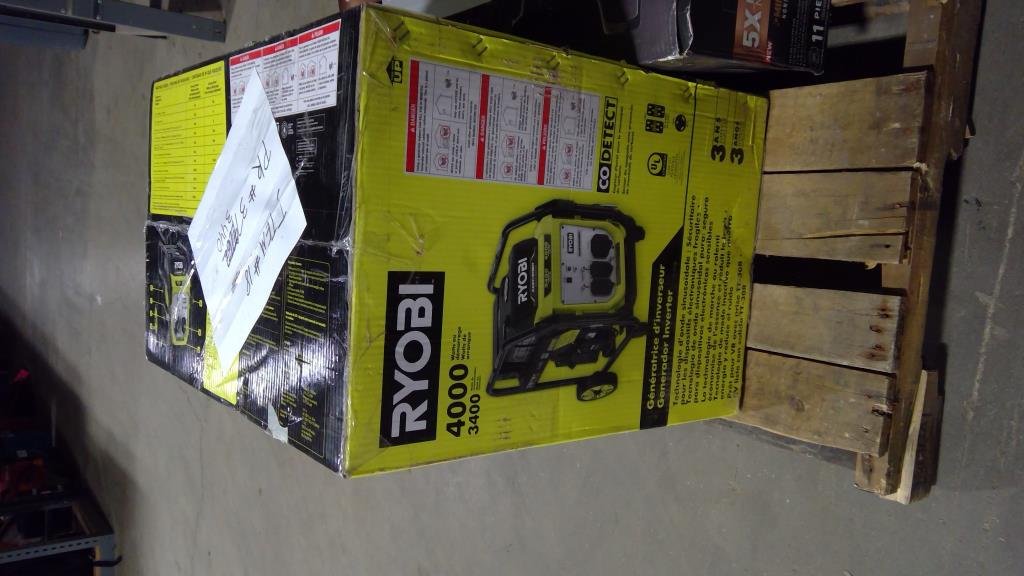
Choosing the right power source can feel like navigating a maze, especially with all the options out there. But when it comes to portable, clean power, Ryobi inverter generators consistently stand out as a smart choice for homeowners, campers, RV enthusiasts, and DIYers alike. If you're wondering how to choose the right Ryobi inverter generator for your specific needs, you’ve come to the right place. We're going to break down everything you need to know, making sense of watts, features, and the best fit for your lifestyle.
Think of this as your personalized consultation with a power expert, designed to cut through the jargon and get straight to what matters. By the end, you'll be confident in selecting a Ryobi generator that perfectly matches your demands.
At a Glance: Your Quick Guide to Choosing
- Determine Your Power Needs: List all appliances you'll run. Calculate both starting and running watts. This is the single most critical step.
- Prioritize Features: Do you need parallel capability for more power? Quiet operation for camping? Specific outlets for your devices?
- Consider Portability: How often will you move it? Look at weight, handles, and wheel kits.
- Evaluate Run Time & Fuel: Longer run times are great for overnight use or extended outages.
- Set a Budget: Ryobi offers excellent value across different price points, so align features with what you're willing to invest.
- Read Reviews: See what other users say about reliability and performance. You can often find valuable insights in reviews of Ryobi generators.
Why Ryobi Inverter Generators? A Smart Power Move
Ryobi has carved out a strong reputation in the power tool and outdoor equipment market, and their inverter generators are no exception. They’re known for delivering reliable, clean power in a user-friendly package that often comes with a more accessible price tag compared to some premium brands.
Unlike traditional open-frame generators, Ryobi inverters produce a much "cleaner" sine wave power. This is crucial for safely running sensitive electronics like laptops, smartphones, and modern appliances without the risk of damage. They’re also typically much quieter and more fuel-efficient, making them ideal for situations where noise and economy matter – think quiet campgrounds, backyard events, or even as a backup for home essentials. For a deeper dive into the brand's offerings, you can Learn more about Ryobi generators.
Unpacking the "Inverter" Advantage
Before we dive into specifics, let's clarify what makes an inverter generator so special. Traditional generators produce raw AC power directly from the engine's rotation. This power often has fluctuations in voltage and frequency, which can be harmful to delicate electronics.
Inverter generators, however, convert the raw AC power into DC power, then "invert" it back into a stable AC output. This two-stage process results in a pure sine wave, mimicking the electricity from your wall outlets. The engine speed also adjusts based on the load, meaning it doesn't always run at full throttle, leading to:
- Quieter Operation: Less engine strain means less noise.
- Better Fuel Economy: Only uses as much fuel as needed for the load.
- Compact Design: Often lighter and easier to transport.
These advantages are precisely why an inverter generator is almost always the preferred choice for recreational use and powering sensitive electronics.
Your Power Blueprint: How Much Juice Do You Really Need?
This is where the rubber meets the road. Choosing the right Ryobi inverter generator starts with accurately assessing your power requirements. Overestimate, and you might spend too much on an unnecessarily large unit. Underestimate, and you'll constantly trip breakers or be unable to power essential items.
Starting vs. Running Watts: The Crucial Difference
Every electrical appliance has two wattage ratings:
- Running Watts (or Rated Watts): This is the continuous power an appliance needs to operate normally.
- Starting Watts (or Surge Watts): This is the momentary burst of power some appliances (especially those with motors, like refrigerators, air conditioners, or power tools) require to start up. This surge can be 2-3 times higher than the running watts, lasting only a fraction of a second.
Your generator must be able to handle the highest starting wattage of any single appliance you'll run, as well as the sum of the running watts of all appliances you intend to use simultaneously.
Making Your Appliance List (and Checking It Twice)
Grab a pen and paper (or open a spreadsheet). List every single item you plan to plug into your generator. Be realistic.
Example Scenario: RV Camping
- Mini-fridge: 800 Starting / 200 Running watts
- Microwave (occasional use): 1500 Starting / 1000 Running watts
- Coffee Maker: 800 Running watts (no significant start-up surge)
- Laptop Charger: 60 Running watts
- Phone Charger: 10 Running watts
- Small Fan: 75 Running watts
Calculation:
- Identify the highest starting wattage: In this case, the microwave at 1500 watts. Your generator must be able to provide at least this much surge power.
- Sum all running watts (excluding the item with the highest starting watts):
- Mini-fridge: 200W
- Coffee Maker: 800W
- Laptop: 60W
- Phone: 10W
- Fan: 75W
- Total Running Watts (without microwave): 1145 watts
- Add the highest starting wattage to the remaining running watts: 1500 (microwave start) + 1145 (other running) = 2645 watts.
This means you'd ideally need a generator with a running wattage of at least 1500-2000 watts and a starting wattage capacity of around 2500-3000 watts to comfortably run these items, with the microwave being used intermittently. It’s always smart to have a little headroom (10-20% extra capacity) to avoid overloads.
Tip: Most appliance manuals or labels will list wattage. If not, a quick online search usually provides estimates.
Beyond Watts: Essential Features to Look For
Once you have a handle on your power needs, it's time to consider the features that will make your Ryobi inverter generator a pleasure to use, not a pain.
Parallel Capability: Doubling Down on Power
Some Ryobi inverter generators come with "parallel capability." This means you can connect two identical (or sometimes compatible different-sized) units together using a parallel kit to effectively double your power output.
- When it's useful: You need more power than a single portable inverter can provide (e.g., running a 15,000 BTU RV AC unit alongside other appliances), but you still want the portability and quiet operation of two smaller units. It’s often more flexible and lighter than one large, heavy generator.
Noise Levels: Silence is Golden (or at least Quieter)
Inverter generators are inherently quieter than traditional models, but there's still a range. Noise is measured in decibels (dB), usually at a distance of 23 feet (or 7 meters).
- Typical Ranges:
- 50-60 dB: Very quiet, like a normal conversation or a quiet office. Ideal for campgrounds, tailgating, or residential backup where noise complaints are a concern. Many Ryobi inverters fall into this range at 25% load.
- 60-70 dB: Noticeable, but still manageable. Similar to a dishwasher.
- 70+ dB: Loud, like a vacuum cleaner or a busy street. Less common for inverters, but some larger models under heavy load might approach this.
If you plan on using your generator in close proximity to others or for extended periods, prioritize a lower decibel rating.
Portability & Design: On the Go or Stationary?
Consider how often and where you'll be moving your generator.
- Weight: Lighter models (under 50 lbs) are easily carried by one person. Heavier models might require two people or integrated wheel kits.
- Handles: Sturdy, ergonomic handles make a big difference. Some models have telescoping handles, like luggage.
- Dimensions: A compact footprint is important for storage in an RV bay, car trunk, or garage.
- Wheel Kits: For generators over 70-80 lbs, a built-in wheel kit is almost a necessity.
Fuel Efficiency & Run Time: Stretching Your Tank
Ryobi inverter generators are generally very fuel-efficient due to their load-sensing engines. Look at the "run time" specification, which is usually given at a 25% load.
- Longer Run Times: Crucial for overnight power in an RV, extended power outages, or job sites where refueling isn't convenient.
- Eco-Mode/Idle-Down Technology: Most inverters have this feature, which automatically adjusts engine speed to match the power demand, saving fuel and reducing noise. Make sure the model you choose has it enabled or as a selectable option.
Outlets & Connectivity: Plugging In Your World
Check the variety and number of outlets to ensure they match your devices.
- 120V AC Outlets (Standard Household): Usually 20A (standard three-prong). You'll typically find two or more of these.
- USB Ports: Increasingly common for directly charging phones, tablets, and other small electronics without needing a separate adapter.
- 12V DC Outlet: Often used for charging automotive-style batteries (requires appropriate cables).
- RV Ready Outlets (TT-30R): A 30A twist-lock outlet is essential for directly connecting to most RVs, eliminating the need for bulky adapters. This is a significant convenience if you're an RVer.
Safety First: Overload Protection and More
Modern generators come with critical safety features:
- Overload Protection: Automatically shuts down the generator if the connected load exceeds its capacity, protecting both the generator and your appliances.
- Low Oil Shut-Off: Prevents engine damage by shutting down the unit if oil levels are too low. Checking the right oil for your Ryobi generator regularly is a good practice.
- Spark Arrestor: Required for use in national parks and forests to prevent wildfires. All reputable generators, including Ryobi, will have this.
- CO Shutoff: A newer, very important safety feature that automatically shuts down the generator if it detects dangerous levels of carbon monoxide (CO) gas. Look for this if possible, especially for models used in enclosed spaces or near living areas.
Matching a Ryobi to Your Needs: Scenarios & Recommendations
Let's look at how different Ryobi inverter generators might fit various common use cases. While we won't name specific models (as availability and specs can change), we'll outline the general power and feature considerations for each scenario.
For Tailgating & Light Recreation
You need enough power for a TV, a blender, some lights, and phone chargers. Noise is a factor, as you'll be in close proximity to others.
- Power: 1600-2300 running watts. This range comfortably handles multiple small appliances and surge needs for items like blenders.
- Key Features: Very quiet operation (sub-60 dB), lightweight design for easy transport, multiple 120V AC outlets, and ideally USB ports. Parallel capability isn't usually necessary unless you're powering a large sound system or multiple elaborate setups.
For RVing & Camping Comfort
You want to power your RV's essential comforts – perhaps a microwave, small AC unit (for larger units, see parallel), refrigerator, lights, and electronics. Fuel efficiency and quietness are paramount for extended stays in nature.
- Power: 2000-3600 running watts. For smaller RVs or basic needs, 2000-2300W is a good start. For running a 13,500 BTU RV AC, you’ll typically need at least 3000-3500 running watts, or two smaller parallel units.
- Key Features: RV-ready TT-30R outlet, excellent fuel efficiency with long run times, very low noise levels (especially at night), and potentially parallel capability if you anticipate needing more power for AC or larger appliances. Weight and compact size for storage are also important.
For Home Backup & Emergency Power
During an outage, you need to keep essential appliances running: a refrigerator, a few lights, a modem/router, and perhaps a fan or small heater.
- Power: 2300-3600 running watts, or even higher with parallel units. A single 2300W unit can power basics, but 3000W+ provides more flexibility for things like a freezer or a portable heater.
- Key Features: Robust build quality, longer run times for extended outages, multiple standard outlets, and a strong emphasis on reliability. While not as critical as for camping, lower noise is still appreciated in a neighborhood setting. Consider parallel capability if you have significant backup needs.
For Job Sites & DIY Projects
You need reliable power for power tools like saws, drills, and chargers. Durability and consistent power output are key.
- Power: 2300-3600 running watts. Power tools often have high starting wattages, so ensure your generator has ample surge capacity.
- Key Features: Durable construction, solid frame (even for inverters, some are more rugged), consistent power output, and a good number of standard 120V AC outlets. Portability is still a factor, but robust wheels and handles might be more important than ultra-lightweight design. Keep up with your unit by checking your Ryobi generator manual for maintenance schedules.
Demystifying the Dollar: Budgeting for Your Power Partner
Ryobi inverter generators offer excellent value, but prices vary based on wattage and features.
- Entry-Level (1600-2300W): Typically found in the $400-$800 range. Perfect for light recreational use, tailgating, and basic home backup.
- Mid-Range (2300-3000W): Usually $700-$1200. These offer more power, often with RV-ready outlets and slightly longer run times, suitable for RVs and more substantial home backup.
- Higher-End (3000W+ or Parallel-Ready Bundles): Can range from $1000-$2000+. These are for serious RVers, more extensive home backup, or small job sites.
Remember, a generator is an investment in convenience and security. Don't just look at the upfront cost, but also consider fuel efficiency (which saves money over time) and the value of the features it provides.
Keeping Your Ryobi Humming: Basic Care Tips
Once you've made your choice, a little preventative maintenance goes a long way in ensuring your Ryobi inverter generator serves you well for years.
- Regular Oil Changes: Follow the manufacturer's recommendations (check your Ryobi generator manual for specifics). This is critical for engine longevity.
- Fuel Storage: Use fresh, stabilized fuel, especially if storing for more than a month. Ethanol in gasoline can cause issues over time.
- Air Filter Inspection: Clean or replace it regularly to ensure optimal engine performance.
- Spark Plug Check: Inspect and replace as needed for easy starting.
- Run It Periodically: Even if you don't use it frequently, start your generator every month or two and let it run for 15-20 minutes under a light load. This keeps the carburetor from gumming up and ensures it's ready when you need it.
- Address Issues Promptly: If you notice anything unusual, from if your Ryobi generator won't start to unusual noises, consult common Ryobi generator troubleshooting tips or your manual.
Avoiding Common Pitfalls: What Not to Overlook
- Running Indoors: NEVER run a generator indoors or in an enclosed space. This includes garages, sheds, or tents. Carbon monoxide is odorless and deadly. Place your generator at least 20 feet from any building openings.
- Overloading: Always stay within the generator's rated running and starting wattage. Overloading can damage the generator and connected appliances.
- Incorrect Extension Cords: Use heavy-duty, outdoor-rated extension cords (12- or 10-gauge, depending on length and load). Undersized cords can overheat and cause fires.
- Neglecting Maintenance: Skipping oil changes or letting old fuel sit can lead to costly repairs down the line. Check for Ryobi generator parts only from reputable dealers if you need replacements.
- Ignoring Battery Issues: If your model has an electric start and the battery isn't charging, be sure to investigate troubleshooting if your Ryobi generator battery isn't charging.
Your Next Steps: Powering Up with Confidence
By now, you should feel equipped with the knowledge to make an informed decision about your Ryobi inverter generator. You've learned how to calculate your power needs, identify essential features, consider portability and budget, and understand basic maintenance.
Your next move is to take that appliance list you made, calculate your wattages, and then start comparing Ryobi's offerings against your specific criteria. Visit their website, check out product descriptions, and read current user reviews.
Investing in a Ryobi inverter generator means investing in reliable, quiet, and clean power for whatever life throws your way—whether it’s a serene camping trip, a lively tailgate party, or simply keeping the lights on during an unexpected outage. Choose wisely, and you'll enjoy years of peace of mind.